
Multi Betting Strategy for World Cup 2026
 Available in US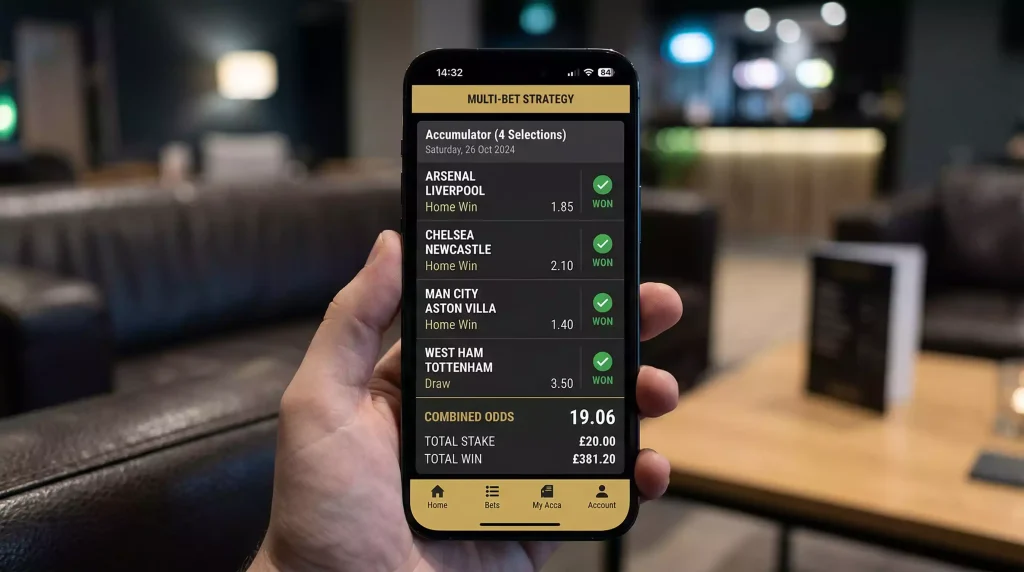
Table of Contents
Eight legs. All winners. $20 turned into $3,847. Qatar 2022 group stage, day one — France beat Australia, England hammered Iran, Netherlands edged Senegal, and five other results I’d correctly anticipated combined into one of those once-a-tournament payouts that makes multi betting feel like the only sensible way to engage with the World Cup. Then I spent the next three weeks chasing that high with 23 consecutive losing multis. The emotional swing from euphoria to frustration taught me that multi betting requires discipline most punters never develop.
Multi betting — combining multiple selections into single wagers where all legs must win for the bet to pay — dominates Australian World Cup wagering. The allure is obvious: multiplied odds create life-changing payouts from modest stakes. But the mathematics ruthlessly punish undisciplined approaches. Every leg you add compounds failure probability, turning “value” selections into collectively negative expected value combinations. The 48-team World Cup 2026 format offers unprecedented multi-building opportunities and equally unprecedented ways to lose money chasing oversized returns.
This guide provides a strategic framework for multi betting during World Cup 2026. Not how to get lucky — luck happens regardless of strategy — but how to structure multis that offer positive expected value over tournament duration. Leg selection, correlation management, stake sizing, and structural decisions that separate sophisticated punters from those donating bankrolls to bookmakers.
What Is a Multi Bet?
My nan calls them “accumulators” — a British term that stuck from her Wolverhampton childhood. Australians say “multis,” Americans say “parlays,” and bookmakers worldwide offer them because they’re enormously profitable… for bookmakers. Understanding the structural mechanics explains why these bets carry inherent disadvantages and how to minimise those disadvantages through intelligent construction.
A multi bet combines two or more selections from different events into a single wager. All selections must win for the bet to pay out. The odds multiply together, creating combined prices that exceed any individual selection. Two selections at 2.00 each create a multi paying 4.00. Three selections at 2.00 create 8.00. Add a fourth and you’re at 16.00 — eight times your stake becomes sixteen times from one additional leg.
The appeal is transformative payouts from small stakes. A $10 five-leg multi at cumulative odds of 50.00 pays $500. That asymmetry — risking lunch money for mortgage payment returns — hooks recreational punters who’d never stake $500 on a single match. Bookmakers understand this psychology and market multis aggressively during tournaments precisely because they’re structurally profitable.
Why are they profitable for bookmakers? Because each leg’s margin compounds across the multi. If a bookmaker builds 5% margin into each selection, a five-leg multi effectively carries 5% × 5 = 25% margin before accounting for compounding. The actual mathematics are slightly more complex, but the principle holds: multis concentrate house edge, favouring operators over punters when selections lack genuine value.
For World Cup 2026, this structural disadvantage intersects with 104 matches across 39 days. Punters building daily multis will place 30-40 multi bets over the tournament. At negative expected value per multi, those 30-40 bets mathematically guarantee net losses for typical recreational approaches. Beating the margin requires disciplined leg selection where each individual selection offers positive expected value — not merely backing “likely winners.”
Pros and Cons of Multis
Every serious punter I know has a complicated relationship with multi betting. We’ve all hit ridiculous payouts that justified the approach, and we’ve all endured losing streaks that made us swear off multis forever. The honest assessment acknowledges both realities without pretending one outweighs the other.
The advantages are genuine. Multis amplify limited bankrolls into meaningful returns when selections align. A $50 World Cup budget can generate $1,000+ returns through well-constructed multis in ways that single betting simply cannot match. For punters who’d otherwise stake $5-10 per match, multis create engagement across multiple fixtures and meaningful emotional investment in tournament outcomes. The entertainment value exceeds single betting for equal outlay.
Multis also reduce variance on individual fixture outcomes. If you’re confident Argentina, France, and Brazil all win their opening matches but uncertain which pays best value individually, a three-leg multi captures value from all three without requiring you to choose. This diversification effect makes multis attractive for punters who identify multiple value selections across a match day without wanting concentrated exposure to any single fixture.
The disadvantages are equally real. Probability mathematics devastate multi success rates. Six legs at 70% individual win probability combine to just 11.7% cumulative probability (0.70^6). You’ll lose nearly nine of every ten six-leg multis even when every individual selection has strong expected value. Most punters underestimate this failure rate because individual legs “feel” likely while the combined probability “feels” reasonable.
Emotional management becomes difficult across multi losing streaks. Hitting that $3,847 payout creates dopamine rushes that encourage increasingly reckless multi construction chasing similar highs. Losing 15 consecutive multis (mathematically normal for six-leg constructions) generates frustration that either drives bankroll-destroying stakes or abandonment of otherwise sound strategies. Neither response serves long-term profitability.
The house edge compounding I mentioned earlier means multis require exceptionally strong individual leg value to overcome structural disadvantages. A multi built from five “fair value” selections (no edge, no disadvantage) is actually a losing bet because bookmaker margins transform fair value into negative value once multiplied. Only multis where every leg offers positive expected value individually can offer positive expected value collectively — and finding five such legs across a single day’s World Cup fixtures proves difficult.
Building World Cup Multis
The group stage practically begs for multi betting. Twelve simultaneous fixtures across opening day, predictable mismatches between top seeds and debutants, and public sentiment creating clear value opportunities on underpriced selections. But construction discipline separates profitable approaches from bankroll destruction.
Start with maximum leg limits. I cap World Cup multis at four legs — occasionally five for exceptional value convergence, never six or above. Four-leg multis at average 1.70 odds per leg pay approximately 8.35 combined. Winning one of every four such multis returns profit; winning one of three generates substantial returns. Five-leg multis at identical odds pay 14.20 but require winning one of seven to break even. The mathematical cliff between four and five legs exceeds most punters’ appreciation.
Build multis from independent fixtures without result correlation. Argentina winning Group J doesn’t affect Netherlands winning Group F — these selections combine cleanly. But Argentina winning and over 2.5 goals in the same match are correlated; backing both offers worse combined value than the multiplication suggests because goal-heavy victories inflate both probabilities. Bookmakers price correlation into same-match multis, erasing the apparent edge.
Prefer multis across different days over same-day constructions. Three selections across Saturday/Sunday/Monday allow information updates between legs. If Argentina wins Saturday but a key France player gets injured, you can cash out the multi before Monday’s France match settles. Same-day multis lock you into fixed positions without adjustment capability.
Favour group stage multis over knockout rounds. Group matches involve teams playing for qualification across three fixtures with understood tactical incentives. Knockout football produces tighter margins, conservative tactics, and unpredictable extra time/penalty resolutions that complicate multi construction. The 48-team format adds a Round of 32 knockout stage that will produce multiple surprise results — your bracket predictions will fail, taking knockout multis with them.
For World Cup 2026 specifically, I’ll build separate multis for each group stage match day rather than spanning multiple days. Day one multis covering all twelve opening fixtures allow diversification across groups. Day two multis adjust based on day one results. This rolling approach captures emerging value rather than locking into pre-tournament positions that ignore information updates.
Smart Leg Selection
Every multi lives or dies on leg quality. One poorly selected leg ruins otherwise excellent constructions. I evaluate each potential leg through three filters before including it in any World Cup multi.
Filter one: does this leg offer positive expected value individually? Convert odds to implied probability and compare against your honest assessment. If USA to beat Paraguay offers 1.50 (67% implied) but you assess American winning probability at only 62%, this leg carries negative expected value. Including negative EV legs in multis guarantees negative EV multis regardless of other legs’ quality. Pass on selections that fail this filter even if they “feel” like near-certainties.
Filter two: does this leg depend on unusual circumstances that increase volatility beyond the odds suggest? Injury doubts, managerial changes, extreme travel, or unusual venue conditions inject variance that standard pricing models miss. Germany at full strength versus Germany missing three key players are different teams; the odds might not fully reflect the difference. Prefer legs where you understand squad composition, tactical setup, and situational factors with confidence.
Filter three: does this leg’s result depend on factors outside the competitors’ control? Referee appointments influence match flow; weather conditions affect playing styles; crowd behaviour shifts momentum. These externalities rarely appear in pre-match pricing but dramatically affect outcomes. The fewer external dependencies your leg carries, the more reliably your pre-match analysis will hold.
For World Cup 2026 group stages, I focus leg selection on clear mismatches where superior teams face motivated debutants. Brazil versus Haiti, Germany versus Curaçao, England versus Panama — these fixtures offer favourable pricing on Asian handicap lines because the mismatches are severe enough that even conservative scorelines clear reasonable handicaps. I’ll build multis combining Brazil -2.5, Germany -2.5, and England -2.0 at cumulative odds that exceed break-even thresholds.
Avoid leg selection based on narratives that don’t affect match outcomes. “Argentina wants revenge for 2022 controversy” doesn’t improve their probability of beating Jordan. “Messi’s last World Cup” creates emotional engagement but not statistical edge. Strip narratives from analysis and evaluate each leg purely on team quality, form, and situational factors.
Finally, never include “filler legs” to boost cumulative odds. If you’ve identified three strong legs paying 6.00 combined, don’t add a fourth mediocre leg just to reach 8.00+. That mediocre leg reduces overall win probability by more than the odds improvement compensates. Three-leg multis beat four-leg multis with identical edge per leg because fewer legs mean higher success rates.
Sample Multi Builds
Theory without application frustrates practical punters. Let me construct three sample World Cup 2026 multis using actual fixtures and realistic pricing, walking through my reasoning at each step.
Group stage opening day multi: Brazil -2.0 at 1.85, Germany -2.5 at 1.95, France -1.5 at 1.70. Combined odds approximately 6.12. Brazil faces Haiti in their Group C opener — a severe mismatch where Brazil’s attacking quality should produce multiple goals against Caribbean opposition. Germany faces Curaçao in Group E — similar dynamic with continental debutants lacking defensive infrastructure to contain German precision. France faces Iraq in Group I — slightly tighter, hence -1.5 rather than -2.0, but Les Bleus’ squad depth overwhelms a side that barely qualified through intercontinental playoffs. Three legs, three mismatches, three positive EV handicap selections. Stake sizing: 2% of World Cup betting bankroll.
Group D Socceroos proximity multi: USA to beat Australia at 1.55, Türkiye to beat Paraguay at 2.00, Paraguay to beat Australia at 2.30. Wait — that’s contradictory. Paraguay beating Australia suggests Paraguay aren’t that weak, yet Türkiye beating Paraguay assumes Turkish superiority. This illustrates correlation traps in same-group multis. Better approach: USA to beat Australia at 1.55 combined with a non-Group D leg like Spain -1.5 versus Cape Verde at 1.65 and Netherlands to beat Japan at 2.00. Combined odds approximately 5.12 across independent fixtures. No contradictory assumptions, clean probability multiplication.
Late group stage value multi: Third-round matches produce unusual dynamics where some teams need results while others are already qualified or eliminated. If Argentina’s Group J position is secure before matchday three, they’ll rotate heavily against Jordan — potentially creating value on Jordan +1.5 or higher. Combining late-stage legs where motivation asymmetries favour underdogs can produce higher-value multis than opening round mismatches. Sample: Jordan +1.5 vs rotating Argentina at 1.75, Tunisia +0.5 vs qualified Netherlands at 2.10, and Iran +0.5 vs qualified Belgium at 2.00. Combined odds approximately 7.35 with each leg capturing motivation edges that standard markets undervalue.
Common Multi Mistakes
Eight years covering tournaments taught me that most multi losses come from systematic errors rather than bad luck. Eliminating these mistakes won’t guarantee profits, but it prevents the self-inflicted losses that drain bankrolls before luck has a chance to matter.
Adding legs for odds rather than value tops the list. When your three-leg multi pays 5.50, the temptation to add a “near-certain” fourth leg for 7.00+ total feels irresistible. But that fourth leg still fails sometimes — and its failure rate exceeds the value its odds addition provides. I’ve watched mates add 1.15 legs to otherwise solid multis, watch those “guaranteed” legs fail, and curse their luck when they manufactured their own misfortune. If a leg doesn’t pass value filters, exclude it regardless of how it affects cumulative odds.
Same-match combinations ignore correlation pricing. Brazil to win AND over 2.5 goals seems like a logical combination — dominant teams score goals. But bookmakers price same-match multis knowing these outcomes correlate. The combined odds understate the value multiplication you’d expect from independent selections. Cross-match multis avoid this trap by combining genuinely independent outcomes.
Chasing losses through larger multis accelerates bankroll destruction. After three consecutive multi losses, the urge to “get it all back” through an aggressive five-leg build feels rational. It isn’t. Larger multis have lower win rates, which means longer losing streaks before eventual wins. Chasing through expansion digs deeper holes rather than climbing out of them. If your multi strategy produces losses, either the leg selection process needs revision or you’re experiencing normal variance — neither is fixed by adding legs.
Ignoring cash-out opportunities wastes edge. Most bookmakers offer partial or full cash-out on multis as legs settle. If your three-leg multi wins legs one and two, cash-out quotes offer guaranteed profit against the risk of leg three failing. Evaluate cash-out decisions on expected value: if the quote exceeds your assessment of remaining leg probability multiplied by full payout, cash out. Pride — “I picked this multi, I’ll ride it” — costs money that disciplined cash-out management preserves.
Finally, multi betting without bankroll allocation guarantees eventual ruin. If you’re staking randomly — $20 here, $50 there, $100 when you “feel confident” — you’re gambling without strategy. Allocate a fixed World Cup multi budget (say, 30% of total World Cup bankroll), divide it across expected number of multis (say, 20 across the tournament), and stake consistently regardless of confidence levels. This approach survives losing streaks and captures winning streaks without emotional stake inflation that concentrates risk inappropriately.
Expert Verdict
Multi betting will deliver some World Cup 2026 punters their most memorable wins — and many more their steepest losses. The strategy separates winners from losers, not the format itself. Structured approaches with leg limits, value filters, correlation awareness, and bankroll discipline generate positive expected value over tournament duration. Undisciplined approaches built from “likely winners” and hope generate donations to bookmakers who price these tendencies into their margins.
Treat multis as high-variance entertainment with potential edge, not lottery tickets. Four-leg maximum construction preserves reasonable win rates. Independent cross-match selections avoid correlation traps. Value filtering on each individual leg ensures the combined multi offers edge rather than compounded disadvantage. Cash-out discipline captures partial profits when available. These practices won’t guarantee wins — nothing guarantees wins — but they’ll position you favourably against the majority of recreational punters who ignore them.
The 48-team World Cup 2026 format creates more fixtures, more mismatches, and more multi opportunities than any previous tournament. Opening day alone features twelve matches — ample material for carefully constructed four-leg builds capturing group stage value. Approach those opportunities systematically using the framework outlined here, and track results across the tournament. By the final, you’ll have data showing whether your leg selection process actually generates edge or merely feels confident. That data drives improvement for future tournaments. Build your first World Cup 2026 multi using the complete betting guide principles, and let disciplined construction rather than hopeful accumulation define your approach.
