
USA at World Cup 2026: Host Nation Betting Analysis
 Available in US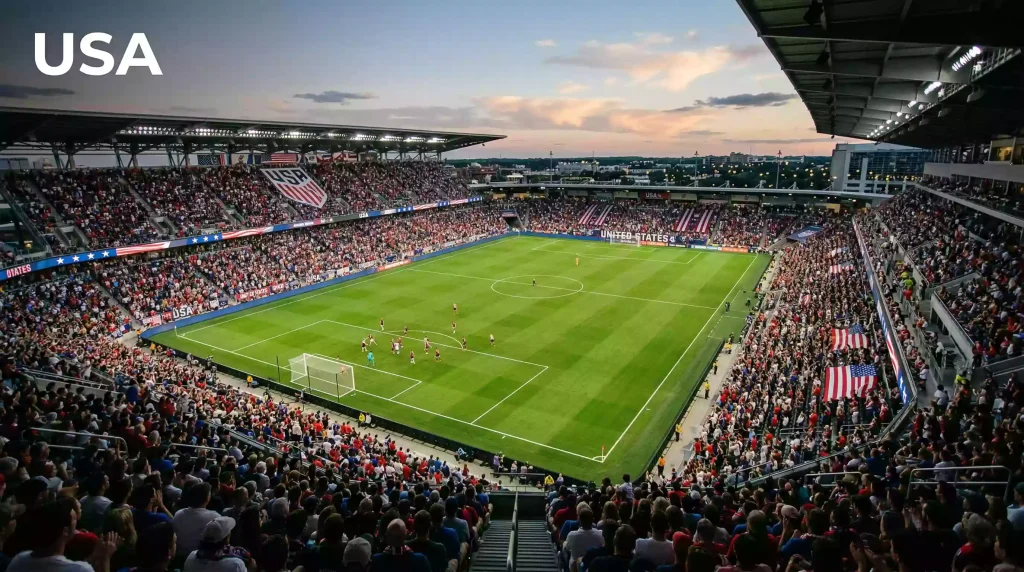
Table of Contents
The United States arrive at World Cup 2026 as primary hosts of a tournament that could define American soccer’s trajectory for decades. Eleven of sixteen venues sit on American soil, creating home-field advantage that previous host nations have exploited to produce tournament successes that exceeded pre-tournament expectations. For Australian punters, the USMNT demand attention not just as Group D opponents but as potential tournament dark horses whose home advantage compounds genuine squad quality.
I’ve watched American soccer develop from afterthought to serious enterprise over the past two decades. The current generation represents the culmination of youth development investment that has produced players competing at Europe’s elite clubs rather than domestic MLS academies alone. Christian Pulisic, Weston McKennie, Tyler Adams, and their teammates carry expectations that previous American squads couldn’t have imagined. Whether they meet those expectations determines both tournament outcomes and the future direction of American sporting attention.
The Home Advantage Factor
Host nation advantage in World Cup history provides compelling evidence that should influence betting assessment. France won in 1998, South Korea reached the semi-finals in 2002, Germany finished third in 2006, and Brazil reached the semi-finals in 2014 despite their infamous 7-1 defeat. The pattern suggests that crowd support, familiar conditions, and reduced travel combine to elevate host nation performance beyond what neutral venue assessment would predict.
The United States hosting eleven venues creates advantages that extend beyond standard home-nation benefits. American crowds will dominate stadiums with passionate support that creates atmosphere unlike standard international fixtures. The team knows these venues intimately, having played in many during domestic competitions and friendlies. Climate and travel familiarity remove variables that affect visiting nations dealing with unfamiliar conditions across three countries spanning multiple time zones.
The psychological dimension of hosting shouldn’t be underestimated. American players will feel the weight of expectation but also the energy of a nation desperate for soccer success to match their investment in the sport. This pressure can either elevate performance or create paralysis depending on player mentality. The current squad’s European experience suggests they handle pressure environments better than previous American generations who played primarily in less intense MLS atmospheres.
For betting purposes, host nation status typically adds 1-2 goals to expected performance across a tournament, reflecting the consistent pattern where hosts outperform their rankings. If your model suggests the USA would reach the quarter-finals on neutral grounds, host advantage could extend that projection to semi-final capability.
Key Players
The USMNT squad combines European-developed talents with domestically produced players whose quality reflects MLS improvement over the past decade. The blend creates tactical flexibility that previous American squads lacked, with different players capable of imposing themselves on matches depending on opponent weaknesses.
Christian Pulisic carries American soccer’s hopes as their most accomplished player of this generation. His AC Milan performances have confirmed the potential that Chelsea couldn’t fully extract, with consistent goal contributions and match-defining moments becoming standard expectations rather than occasional highlights. Pulisic’s ability to beat defenders, create chances for teammates, and finish opportunities himself makes him the creative focal point that American attacks flow through. His fitness for the tournament determines the ceiling of American ambitions.
Weston McKennie provides the box-to-box energy that modern midfields require. His Juventus experience demonstrates capability to compete at elite European levels, with physical presence, tactical intelligence, and late arriving runs into the penalty area creating goal threats from central positions. McKennie’s partnership with Adams establishes the midfield foundation that allows attacking talents freedom to express themselves.
Tyler Adams captains the side with leadership maturity that exceeds his years. His positional discipline, passing accuracy, and defensive interventions protect the back line while initiating attacking transitions. Adams’ reading of the game allows him to intercept passes and win possession in areas that immediately threaten opponents. His importance to American structure cannot be overstated — his absence through injury would significantly reduce tournament prospects.
Giovanni Reyna represents the X-factor whose availability and form could determine tournament outcomes. His technical ability suggests world-class potential that injuries have prevented him from consistently demonstrating. A fully fit Reyna provides creative options that transform American attacking threat, while an injured or unavailable Reyna removes a dimension that makes the USA harder to defend against.
Defensively, the centre-back partnerships and full-back positions feature competition that tactical requirements will resolve. The goalkeeping position has developed genuine quality, with Matt Turner and alternatives providing security that previous American squads sometimes lacked. The defensive organisation has improved significantly, reducing the vulnerability to quality opposition that characterised earlier generations.
Folarin Balogun leads the line with goal-scoring instincts developed through Monaco and English football pathways. His decision to represent the United States rather than England adds quality that strengthens American attacking options considerably. Balogun’s movement and finishing provide the central threat that allows wide players like Pulisic space to exploit.
Group D (vs Australia)
The Group D draw placed the United States alongside Paraguay, Australia, and Türkiye. This represents the toughest group for any host nation, with all three opponents capable of producing competitive matches that test American credentials. For Australian readers, this section demands particular attention given the direct implications for Socceroos progression.
The USA vs Australia fixture at Lumen Field in Seattle represents a defining match for both nations’ tournament hopes. American home advantage will be pronounced in a city with passionate soccer support, creating an atmosphere that could overwhelm opponents not accustomed to such environments. The Socceroos must handle this pressure while competing against a technically superior opponent on their home soil.
Historical meetings between these nations have generally favoured the United States, though Australia’s 2022 World Cup round of 16 achievement demonstrated growth that narrows perceived quality gaps. The tactical battle will likely feature American possession dominance against Australian defensive organisation, with transitions determining outcomes. American pace through Pulisic and width options creates exactly the problems that Australian full-backs will struggle to contain.
Paraguay provide South American grittiness that CONMEBOL qualification develops across years of competitive fixtures. Their tactical organisation and defensive discipline make them uncomfortable opponents regardless of technical inferiority. The USA should handle Paraguay professionally, but underestimation invites upset potential that tournament history confirms repeatedly.
Türkiye return to the World Cup after 24 years with a squad featuring elite European talent. Arda Güler and Hakan Çalhanoğlu provide individual quality matching anyone in the group, while Turkish tactical development under recent management has produced competitive performances against top nations. This fixture could prove as challenging as any for American progression, potentially deciding group positions ahead of Australia.
Tactical Setup
American tactical identity has evolved toward possession-capable systems that reflect the technical improvement of players developed in European academies. The current approach prioritises ball retention while maintaining counter-attacking threat through pace on transitions. This balance acknowledges both squad strengths and the realities of tournament football where defensive solidity often matters more than attacking ambition.
The base formation typically features 4-3-3 with fluid attacking positions that allow Pulisic to drift from wide areas into central positions. The midfield triangle provides defensive coverage while maintaining passing options that progress play through central areas. Full-backs have license to advance when match states permit, creating width that complements narrow attacking movements.
Defensive organisation has improved significantly from previous American squads that could be exposed by quality opposition. The pressing structure balances aggression with defensive responsibility, avoiding the gaps that faster technical teams previously exploited. Set-piece organisation on both ends reflects coaching attention that tournament preparation requires.
The tactical flexibility to adjust mid-match represents growth that elevates American capability. Previous squads might struggle when initial approaches failed; the current group can adapt formations and personnel to address opponent tactics. This adaptability proves crucial in knockout rounds where half-time adjustments often determine outcomes.
Betting Odds Analysis
The United States trade around 15.00-20.00 in outright winner markets, positioning them as second-tier contenders whose home advantage justifies shorter odds than pure quality assessment might suggest. This pricing implies approximately 5-7% probability of winning their first World Cup, reflecting both optimism about home advantage and scepticism about whether American quality matches elite European and South American nations. The odds have shortened from opening positions as the tournament approaches and host nation betting patterns emerge.
The odds feel approximately fair to potentially generous depending on your weighting of home advantage. American squad quality has improved dramatically, with players competing at elite European clubs rather than relying on MLS development alone. Combined with the documented pattern of host nation overperformance, current prices might undervalue American chances of deep progression. Historical evidence suggests backing hosts produces positive expected value across tournament betting.
Group D winner odds position the USA around 1.80-2.00, implying roughly 50-56% probability of topping their group. This pricing acknowledges the challenging draw while respecting home advantage that should produce at least one comfortable victory. The Group D analysis details how American progression affects Australian hopes, making this market particularly relevant for Socceroos supporters assessing their own qualification chances.
To reach semi-finals prices around 4.00-5.00 warrant consideration given host advantage combined with genuine squad quality. The path through the bracket depends on group finishing position, but American progression through early knockout rounds seems achievable against most potential opponents when home crowd support provides additional impetus. These odds may shorten as tournament approaches and casual punters back the home nation.
Top Group D scorer markets typically feature Pulisic at competitive odds, but Balogun might offer value if his starting role produces consistent minutes against beatable opponents. Consider each-way positions on secondary attackers who benefit from opponents focused primarily on containing Pulisic.
Value Angles
USA to reach the quarter-finals represents the safest American market position. Host advantage combined with squad quality suggests knockout progression is highly probable, with current pricing potentially undervaluing this minimum expectation. If you believe the USA reach at least the last eight more than 60% of the time, markets might offer value.
Christian Pulisic for Golden Boot represents speculative value if American progression extends deep into the tournament. His guaranteed starting role, creative burden, and penalty potential create the goal-scoring platform necessary for top-scorer challenges. Current odds likely exceed 15.00, offering significant returns if American tournament success produces Pulisic goal accumulation.
For the Australia match specifically, American victory with over 2.5 goals combined represents aggressive position that home advantage and quality differential support. If you assess the USA handle Australian defensive organisation while crowd pressure creates Socceroos errors, this fixture could produce comfortable American victory.
USA to reach the final offers long-shot value for those believing home advantage can overcome quality gaps against elite opponents. Historical precedent includes hosts reaching finals they wouldn’t achieve on neutral venues, making this market interesting despite appearing optimistic based purely on squad assessment.
World Cup History
American World Cup history features occasional moments of success surrounded by long periods of underperformance relative to the nation’s sporting resources. The 1930 semi-final finish represents their best result, achieved in an era when the tournament featured far fewer participants and European travel prevented many nations from competing. More recent history includes 2002 quarter-final progression and 2014 round of 16 exit, demonstrating capability for knockout advancement without suggesting elite contender status.
The failure to qualify for 2018 World Cup in Russia represented humiliation that forced American soccer to reassess development priorities. That embarrassment occurred despite the emerging generation’s youth, but the absence from the tournament denied crucial experience that affects current preparations. The current squad has only one World Cup tournament experience from 2022, where they reached the round of 16 before losing to the Netherlands in a match where American ambition exceeded their finishing quality.
The 2026 tournament represents American soccer’s most significant opportunity to establish the sport’s domestic prominence. Successful home tournament performance could shift sporting attention in ways that decades of MLS development couldn’t achieve. The stakes extend beyond mere competition to American soccer’s cultural position, creating pressure that either elevates or undermines performance. Major American sports media will cover this tournament extensively, creating visibility that could attract new supporters or reinforce dismissive attitudes depending on results.
The 1994 World Cup hosting, while successful commercially, produced round of 16 exit that failed to capture mainstream American sporting attention. Current American soccer infrastructure far exceeds 1994 capabilities, suggesting better tournament performance should follow from improved preparation and player quality. Whether history repeats or this generation writes new chapters depends on performances that begin with Group D fixtures.
Expert Verdict
The United States enter World Cup 2026 as hosts whose genuine squad quality combines with home advantage to create contender credentials. Pulisic, McKennie, Adams, and their teammates possess European experience that previous American squads lacked, while playing before passionate home crowds adds psychological dimension that elevates tournament capability. All the ingredients for historic American achievement are present, and dismissing USA as mere participants would be analytically incorrect.
The concerns centre on whether American quality can overcome elite opponents who possess both superior technical ability and tournament experience. The host advantage pattern provides encouraging precedent, but the 48-team format means the USA must win seven matches to claim the trophy — a challenge that even enhanced home support might not sufficiently address against opponents like Argentina, France, or Spain. The path to the final requires defeating elite opposition somewhere along the way.
Group D should be navigated successfully, though the Australia match demands serious application and the Türkiye fixture could prove competitive. American progression to knockout stages seems highly probable, with home advantage providing margin for error that visiting nations don’t possess. The Group D preview examines these dynamics in detail. The test comes in quarter-finals and beyond where American quality faces direct examination against elite opposition who have won tournaments before.
Current odds around 15.00-20.00 represent potentially attractive value for those believing host advantage can produce semi-final or better finish. For Australian punters, the USA warrant respect as Group D favourites whose home advantage compounds quality differential. The Socceroos face their most challenging group opponent at Lumen Field, where American crowd support and superior technical quality create significant obstacles to overcome. Understanding American capability is essential for assessing Australian betting positions.
