
World Cup 2026 Groups: All 12 Groups Analysed
 Available in US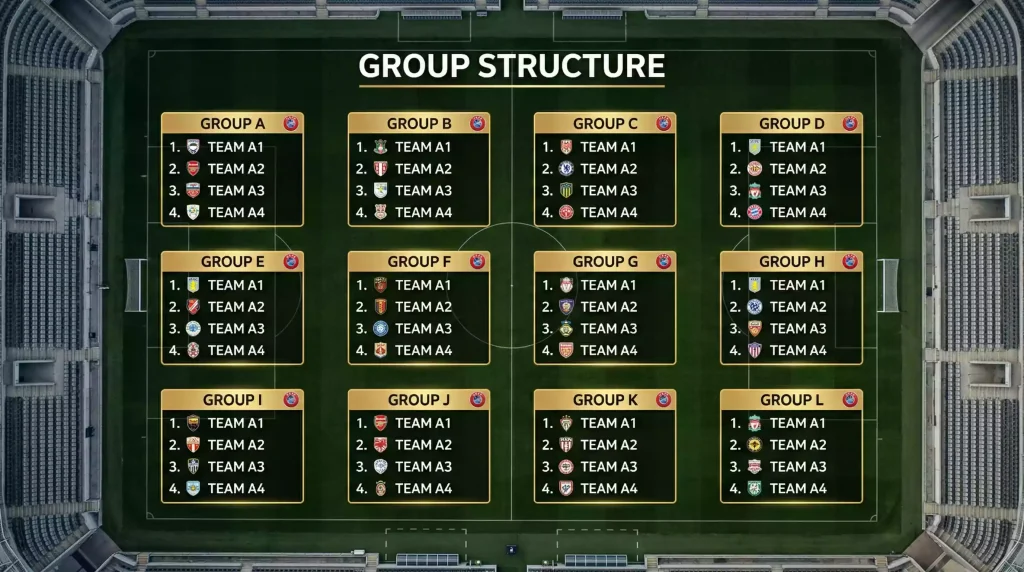
Table of Contents
Twelve groups. Forty-eight teams. One hundred and four matches before the knockout rounds even begin. The World Cup 2026 group stage represents the most ambitious expansion in FIFA tournament history, and I’ve spent the past three months dissecting every possible permutation since the draw ceremony concluded. What strikes me most about this configuration isn’t just the sheer scale — it’s how the traditional group stage calculus has fundamentally changed. With eight best third-placed teams advancing alongside the top two from each group, the margin for error has widened considerably, yet the strategic complexity has somehow increased. Teams that might have parked the bus in previous tournaments now face different mathematical realities. A single goal difference could determine whether you face a tournament favourite in the Round of 32 or a far more manageable opponent.
For Australian punters, these World Cup 2026 groups present both opportunities and challenges. The Socceroos landed in Group D — arguably the toughest of the three host nation groups — but the expanded qualification pathway means realistic progression scenarios exist. Understanding each group’s dynamics, the likely finishing orders, and where the betting markets have mispriced outcomes gives you a significant edge heading into June. I’ll break down all twelve groups with the analytical rigour this tournament deserves, highlighting the betting angles that have genuine value rather than the surface-level narratives dominating mainstream coverage.
How the Group Stage Works
The last World Cup with twelve groups was never — this is genuinely unprecedented territory. FIFA has constructed a format that attempts to preserve competitive integrity while accommodating 50% more teams than Qatar 2022. Each of the twelve groups contains four teams, maintaining the familiar three-match minimum per nation. The crucial difference lies in the qualification pathway: twenty-four teams advance to the knockout rounds, comprising the top two from each group plus eight best third-placed teams.
That third-place provision changes everything about group stage strategy. In the 32-team format, finishing third meant elimination regardless of point total. Now, a third-placed team with four points — say, a win and a draw — has an excellent chance of progressing. Historical analysis of previous expanded tournaments suggests third-placed teams typically need three to four points for advancement, though goal difference becomes the critical tiebreaker when multiple teams finish level.
The tiebreaker sequence follows established FIFA protocol: points, goal difference, goals scored, head-to-head results, then disciplinary record. What’s new is how these tiebreakers apply across groups when comparing third-placed teams. FIFA will rank all twelve third-placed finishers using identical criteria, selecting the top eight for Round of 32 advancement. This creates fascinating scenarios where a 1-1-1 record might be enough in one group but insufficient in another, depending entirely on goal difference and the performances across all twelve pools.
Match scheduling follows a staggered approach across the three host nations. Groups featuring host teams have been strategically distributed: USA anchors Group D, Mexico opens the tournament in Group A, and Canada hosts Group B matches in Toronto and Vancouver. The geographical spread means Australian supporters face varied kickoff times in AEST, though the North American time zones generally produce favourable viewing windows between 5 AM and 2 PM local time.
Group A: Mexico, South Africa, South Korea, Czechia
The tournament begins here — Mexico versus South Africa at the Estadio Azteca on June 11, a deliberate echo of the 2010 World Cup opener that South Africa drew 1-1 with Mexico in Johannesburg. That historical parallel hasn’t escaped bookmakers, who’ve priced the draw at surprisingly short odds given Mexico’s home advantage. The Azteca remains one of football’s most intimidating venues, its 2,240-metre altitude and passionate crowd capable of overwhelming opponents before kickoff.
Mexico enters as clear group favourites at around 1.70 for top spot, though their recent form warrants scepticism. El Tri struggled through CONCACAF qualification, finishing third behind the USA and Canada, and the post-Gerardo Martino era has brought transitional pains. South Korea represents the genuine threat — the Taegeuk Warriors have reached the Round of 16 or better in three of the last five World Cups and possess the midfield quality through Lee Kang-in to trouble any opponent.
Czechia qualified through the UEFA playoffs, defeating Denmark on penalties after a 2-2 draw, and carry underdog potential that the 8.00 group winner odds don’t fully capture. Patrik Schick remains their dangerman — his tournament-high five goals at Euro 2020 demonstrated an ability to deliver on the biggest stages. South Africa’s return to the World Cup after missing 2018 and 2022 brings emotional resonance but limited realistic ambitions beyond third place.
The betting angle here involves South Korea at 4.50 to win the group. Mexico’s home advantage is substantial but not insurmountable, and the Koreans’ tournament pedigree suggests they could capitalise on any El Tri stumbles. The match between these two on matchday two could effectively decide first place.
Group B: Canada, Bosnia and Herzegovina, Qatar, Switzerland
Canada’s first home World Cup since never — the country has only qualified twice previously, in 1986 and 2022 — generates enormous local anticipation but equally significant pressure. The Canadians impressed in Qatar with spirited performances despite zero points, and their core of Alphonso Davies, Jonathan David, and emerging talents has only improved. Toronto’s BMO Field and Vancouver’s BC Place host the group matches, providing genuine home support that Davies in particular thrives upon.
Switzerland represent the seasoned operators here. The Swiss have reached the knockout rounds in four consecutive World Cups and five of the last six, a consistency rate that few nations match. Granit Xhaka’s leadership and a solid defensive structure make them difficult to beat, if rarely spectacular. Their 2.80 group winner odds feel accurate — good enough to challenge but lacking the ceiling for favouritism.
Bosnia and Herzegovina qualified through the playoffs after eliminating Italy on penalties — perhaps the tournament’s most shocking qualification result. That penalty shootout victory in Sarajevo ended Italy’s World Cup dreams for the third consecutive tournament, and the Bosnians arrive with genuine belief. Edin Dzeko may be 40 by tournament time, but his experience and aerial presence remain formidable weapons against less physical defenders.
Qatar’s inclusion as defending hosts raises questions about competitiveness. The 2022 tournament saw them become the worst-performing host nation in World Cup history, losing all three group matches while scoring one goal. Without home advantage, their prospects appear bleak despite continued investment in the national programme. The value bet here involves backing Bosnia at 6.00 to upset the established order — their playoff form suggests a team peaking at the right moment.
Group C: Brazil, Morocco, Haiti, Scotland
The 2022 quarterfinal rematch everyone wanted — Brazil versus Morocco — arrives in the group stage, and the Atlas Lions will fancy their chances of another upset. Morocco’s historic run to the semi-finals transformed African football’s profile and demonstrated that their defensive organisation and counter-attacking quality could trouble anyone. The narrative power of this fixture alone makes Group C appointment viewing.
Brazil enter as tournament favourites in most betting markets despite their Qatar 2022 quarterfinal exit to Croatia on penalties. The Seleção’s rebuilding process under new management has produced encouraging results, and the attacking talent pipeline from Rodrygo, Vinicius Junior, and Endrick suggests goals won’t be a problem. Their 1.45 group winner odds reflect near-certainty, though Morocco’s presence prevents this from being a procession.
Scotland’s qualification ends a generation of near-misses and tournament absences. The Tartan Army last appeared at a World Cup in 1998, making this a quarter-century wait that’s generated unprecedented supporter interest. Steve Clarke’s pragmatic approach earned qualification through a tough UEFA group, but realistic expectations centre on third place and potential advancement as a best third-placed team.
Haiti’s presence marks just their second World Cup appearance after 1974, a return that’s inspired a nation with limited football infrastructure but unlimited passion. Their CONCACAF qualification campaign surprised observers, though the quality gap against Brazil and Morocco appears substantial. Scotland at 4.00 for second place represents reasonable value given Morocco’s tendency toward defensively cautious approaches that could produce draws.

Group D: USA, Paraguay, Australia, Türkiye
The Socceroos drew the short straw among the host nation groups — not because USA are unbeatable, but because every team here can genuinely compete. Paraguay’s South American grit, Türkiye’s explosive talent returning after 24 years of World Cup absence, and USA’s home advantage create a group where any finishing order feels plausible. I’ve analysed this draw extensively since the ceremony, and the betting markets haven’t fully captured the competitive balance.
USA enter as favourites at 1.80, their home advantage and recent development under various managers creating genuine World Cup ambitions rather than participation goals. Christian Pulisic, Weston McKennie, and a young core that’s matured through European club football provide quality that previous American generations lacked. The crowd support across Seattle, Philadelphia, and the other US venues will be deafening, creating an atmosphere that visiting teams must navigate psychologically before tactical considerations enter the equation.
Australia face a fascinating challenge — winnable on paper but requiring near-perfect execution across all three matches. The Socceroos open against Türkiye in Vancouver on June 14, face the hosts in Seattle on June 19, and conclude against Paraguay in San Francisco on June 26. That scheduling means two matches on American soil against the tournament’s physical South American representatives and the hosts themselves. The 2.80 odds for qualification reflect genuine difficulty but also genuine possibility.
Türkiye’s return after missing six consecutive World Cups brings Arda Güler, the Real Madrid sensation, onto football’s biggest stage. The 21-year-old’s technical brilliance and creativity could unlock any defence, and his supporting cast of Hakan Çalhanoğlu and emerging talents creates a team capable of group stage fireworks. Their 3.50 odds for second place may undervalue a squad that’s been building toward this moment for years. Paraguay remain the group’s most unpredictable element — organised, experienced, and exactly the type of opponent that can frustrate favoured teams through disciplined defensive blocks and set-piece threats.
Group E: Germany, Curaçao, Ivory Coast, Ecuador
Germany’s World Cup redemption arc begins here after consecutive group stage eliminations in 2018 and 2022 — results that would have seemed unthinkable during their 2014 triumph. Die Mannschaft enter with a point to prove and a squad that’s undergone significant transition, moving away from the aging core that underperformed toward younger talents like Florian Wirtz and Jamal Musiala. Their 1.35 group winner odds reflect near-certainty, though Ecuador’s quality prevents complacency.
Curaçao’s qualification represents the tournament’s ultimate underdog story. The Caribbean island of 150,000 people reached the World Cup through CONCACAF’s expanded pathway, defeating Honduras in the playoffs. Their first-ever World Cup appearance will be celebrated regardless of results, though the realistic gap against Germany and Ecuador appears substantial. The experience itself — competing against world-class opponents — provides value beyond the scorelines for their developing football programme.
Ivory Coast arrive as Africa Cup of Nations champions, their February 2024 triumph on home soil restoring belief after a difficult qualification campaign that required a coaching change mid-tournament. The Elephants’ blend of European-based talent and tactical pragmatism makes them dangerous second-round opponents, and their 5.00 group runner-up odds feel generous given their continental champion status.
Ecuador impressed at Qatar 2022 before a Round of 16 exit to Senegal, and this generation of Ecuadorian football arguably possesses more depth than any previous version. Brighton’s Moisés Caicedo anchors the midfield with world-class quality, while their attacking options continue developing through South American competition. The betting value involves Ecuador at 4.50 for second place — they’re better than Ivory Coast despite the odds suggesting otherwise.
Group F: Netherlands, Japan, Sweden, Tunisia
Japan’s giant-killing credentials — victories over Germany and Spain in Qatar 2022’s group stage — make them the team nobody wants to face. The Samurai Blue have evolved from plucky underdogs into genuine contenders, their pressing intensity and technical quality capable of overwhelming European opponents who underestimate Asian football’s tactical sophistication. Their 3.50 group winner odds feel about right given Netherlands’ quality, but an upset wouldn’t surprise anyone.
Netherlands carry the perpetual nearly-men narrative — three World Cup finals without victory, and consistent quarterfinal or semi-final appearances that never quite produce the ultimate prize. The Oranje’s current generation under Ronald Koeman shows glimpses of total football revival, and Virgil van Dijk’s defensive leadership provides the foundation that creative talents like Xavi Simons can build upon. Their 1.90 favouritism appears justified but far from certain.
Sweden’s qualification through the UEFA playoffs, defeating Poland 3-2 in a dramatic encounter, continues their recent World Cup success story. The post-Zlatan era has produced solid if unspectacular results, and Alexander Isak’s emergence as a genuine number nine provides the goalscoring threat previous Swedish sides lacked. Their pragmatic approach could accumulate enough points for progression without ever threatening group supremacy.
Tunisia represent North African football’s established World Cup participants, this being their sixth consecutive qualification. The Eagles of Carthage held Denmark and drew 0-0 with France in Qatar 2022 before losing to Australia in their final group match. Their defensive organisation rarely produces embarrassing results, but equally rarely produces victories against quality opponents. Backing Japan at 3.50 for group victory offers value given their recent performances against European elite.
Group G: Belgium, Egypt, Iran, New Zealand
Belgium’s golden generation faces one final opportunity — many of their core players will be 32-35 by tournament time, making this realistically their last chance at major honours. Kevin De Bruyne, Romelu Lukaku, and the remnants of the squad that finished third in Russia 2018 know the clock has nearly expired. Their 1.65 group winner odds reflect the talent remaining, though recent tournament performances have disappointed relative to rankings and expectations.
Egypt’s Mohamed Salah finally gets his World Cup moment after injury robbed him of full fitness during Russia 2018’s group stage. The Liverpool superstar carries a nation’s hopes at what will likely be his final World Cup given his age, and Egypt’s qualification represents African football’s continued strength. Their defensive organisation under Portuguese management creates a team capable of frustrating superior opponents, making them genuine dark horses at 6.00 for group runner-up.
Iran continue their recent World Cup presence — this marks their third consecutive qualification — and bring the political controversies that surrounded their Qatar 2022 campaign into another tournament. On the pitch, Team Melli possess underrated quality and organisation that produces competitive performances against anyone. Their 1-0 victory over Wales in 2022 demonstrated they can deliver in crucial moments.
New Zealand’s qualification through the OFC playoff pathway gives Oceania representation and creates a Pacific rivalry of sorts with Australia. The All Whites haven’t won a World Cup match since their famous 1-1 draw with Italy in 2010, and the quality gap against Belgium and Egypt appears substantial. However, their never-say-die attitude could produce a result that disrupts group calculations.
Group H: Spain, Cape Verde, Saudi Arabia, Uruguay
Spain versus Uruguay — a fixture that evokes Luis Suárez’s 2010 handball, Diego Forlán’s brilliance, and decades of competitive matches between these footballing cultures. This group features the most interesting tactical contrast: Spain’s possession-based approach against Uruguay’s South American pragmatism, with Saudi Arabia’s potential for upsets and Cape Verde’s debutant enthusiasm adding unpredictability.
Spain enter as Euro 2024 champions and tournament favourites alongside Argentina and France. La Roja’s young core of Lamine Yamal, Pedri, and Gavi represents generational talent that could dominate World Cup football for the next decade. Their 1.30 group winner odds leave minimal value, but the certainty appears justified given their recent form and tactical cohesion under Luis de la Fuente.
Uruguay’s experience — this being their 14th World Cup — provides the cynical know-how to navigate difficult groups. La Celeste qualified comfortably through CONMEBOL and possess the tournament’s most intriguing forward prospect in Darwin Núñez, whose chaotic brilliance produces both wonder goals and inexplicable misses. Their 2.50 runner-up odds feel accurate rather than value-laden.
Saudi Arabia carry the “Argentina beaters” label into another World Cup after their stunning 2022 group stage victory. That result, while historic, shouldn’t obscure the subsequent losses to Poland and Mexico that prevented progression. Cape Verde’s first World Cup appearance represents a remarkable achievement for the island nation of 600,000 people, though competitive results against Spain and Uruguay seem unlikely.
Group I: France, Senegal, Norway, Iraq
France’s status as perennial favourites continues despite their 2022 final loss to Argentina — the current squad arguably possesses more depth than the World Cup-winning 2018 version. Kylian Mbappé enters as the world’s most valuable player following his Real Madrid move, and the supporting cast of Antoine Griezmann, Marcus Thuram, and emerging talents creates attacking options that no opponent can comfortably defend against. Their 1.40 group winner odds reflect deserved favouritism.
Senegal represent African football’s strongest contender, their 2022 Africa Cup of Nations triumph and subsequent World Cup Round of 16 appearance demonstrating consistent quality. The post-Sadio Mané era has arrived, but the Lions of Teranga possess sufficient talent through Ismaïla Sarr and Nicolas Jackson to remain dangerous opponents. Their 3.00 runner-up odds offer marginal value given Norway’s limitations.
Norway’s qualification ends decades of underperformance relative to their talented individuals. Erling Haaland finally reaches a major tournament — a travesty it took this long given his club-level dominance — and Martin Ødegaard’s creative brilliance provides the service his Manchester City teammate craves. The question becomes whether two world-class players can compensate for a supporting cast that lacks depth against France and Senegal.
Iraq’s qualification through the AFC/CONMEBOL playoff victory over Bolivia represents a remarkable return to the World Cup after a 38-year absence. The Lions of Mesopotamia last appeared in Mexico 1986, and this qualification has unified a nation that’s endured extraordinary difficulties. Their competitive chances appear limited, but the emotional resonance of their participation transcends results.
Group J: Argentina, Algeria, Austria, Jordan
The defending champions return with everything to lose. Argentina’s Qatar 2022 triumph — Lionel Messi’s coronation moment — established them as the team to beat, and the inevitable “can they repeat” narrative dominates pre-tournament coverage. The Albiceleste qualified comfortably through CONMEBOL and possess a squad that’s barely changed from their winning version, with Enzo Fernández’s continued development arguably improving their overall quality.
Messi will be 39 by the final, making this almost certainly his last World Cup. Whether he retains the physical capacity for tournament football remains uncertain — his Inter Miami performances suggest adaptation to a different role rather than continued elite production. Argentina’s strength lies in their supporting cast: Julián Álvarez’s emergence, Rodrigo De Paul’s relentless pressing, and a defensive structure that concedes little. Their 1.25 group winner odds leave no value but reflect overwhelming favouritism.
Algeria carry the “Africa Cup of Nations champions” status from 2019 and represent genuine group stage threats despite limited World Cup history. Riyad Mahrez’s international retirement removes their most creative outlet, but the squad depth developed through consistent African competition creates an organised side capable of frustrating anyone. Their 6.00 runner-up odds feel about right given Austria’s quality.
Austria’s tournament return after missing Qatar 2022 brings David Alaba’s leadership and a squad that’s performed above expectations in recent qualifications. Austria offer solid organisation and limited creative spark — the type of European team that accumulates draws without winning matches. Jordan’s first World Cup qualification represents an historic AFC achievement, though their competitive chances against Argentina and Algeria appear minimal.
Group K: Portugal, DR Congo, Uzbekistan, Colombia
Portugal versus Colombia features two traditional World Cup nations with modern attacking stars — a fixture that belongs in the knockout rounds rather than the group stage. This draw created one of the tournament’s most competitive groups, where the two best third-placed team spots could both come from Group K’s losers. The betting markets have responded with compressed odds that reflect genuine uncertainty.
Portugal’s post-Cristiano Ronaldo era has arrived — the legendary striker may still be included but no longer dictates tactical planning. Bruno Fernandes’ creativity and Rafael Leão’s electric pace provide the new attacking identity, while João Neves and Vitinha represent generational midfield talent. Their 1.70 group winner odds seem low given Colombia’s quality and recent form.
Colombia qualified impressively through CONMEBOL, their best qualification campaign in recent memory producing consistent results. Luis Díaz’s Liverpool form has made him one of world football’s most exciting wingers, and James Rodríguez’s international resurrection provides the creative hub that previous campaigns lacked. Their 2.50 group winner odds offer value against Portugal — this is closer to a coin flip than the markets suggest.
DR Congo qualified through the intercontinental playoffs, defeating Jamaica 1-0 after extra time. The Leopards return to the World Cup for just the second time, their only previous appearance coming in 1974 as Zaire. Uzbekistan’s qualification maintains Central Asian representation, though their chances against Portugal and Colombia appear limited. The value play here involves Colombia at 2.50 to win the group — their current form exceeds Portugal’s despite the historical reputation gap.
Group L: England, Croatia, Ghana, Panama
England versus Croatia — the 2018 semi-final rematch that ended English dreams in Moscow — provides Group L’s headline fixture. Luka Modrić’s extra-time winner that night remains a traumatic memory for English supporters, and while both squads have evolved significantly, the psychological edge belongs to Croatia. This group features two teams with realistic ambitions and two who’ll compete for third place.
England enter among the tournament favourites after consecutive Euro final appearances in 2021 and 2024. The Three Lions possess arguably their most talented squad in generations — Jude Bellingham’s emergence, Harry Kane’s proven international scoring record, and Phil Foden’s creative brilliance create multiple attacking pathways. Their 1.50 group winner odds reflect deserved favouritism, though Croatia’s tournament pedigree demands respect.
Croatia’s remarkable consistency — World Cup final in 2018, third place in 2022 — defies their population of four million. Modrić will be 41 by the tournament, almost certainly his last World Cup, but the supporting cast of Joško Gvardiol, Mateo Kovačić, and emerging talents maintains quality that punches above their weight. Their 2.80 runner-up odds feel accurate but not generous.
Ghana’s return after missing Qatar 2022 brings renewed African representation, while Panama’s second consecutive World Cup appearance demonstrates CONCACAF’s expanded competitiveness. Neither should trouble England or Croatia for top-two finishes, but both could accumulate enough points through competitive performances to finish as best third-placed teams. Backing England at 1.50 for group victory represents the rare favourite position with genuine value — their quality advantage appears substantial.
Groups of Death: Toughest Draws
The “group of death” designation gets applied liberally every World Cup, often to groups that prove straightforward once matches begin. For 2026, I’d identify three genuinely competitive groups where progression requires defeating quality opponents rather than navigating around them.
Group D — USA, Paraguay, Australia, Türkiye — stands out for competitive balance rather than star quality. No overwhelming favourite exists, meaning every match carries genuine consequence. The Socceroos’ path to progression runs through at least one victory against established World Cup nations, and the scheduling means facing the hosts after an opening match against tournament returners Türkiye. This group could produce multiple teams with identical records, making goal difference the determining factor.
Group F — Netherlands, Japan, Sweden, Tunisia — features three teams with recent knockout round pedigree and one capable of spoiling calculations. Japan’s victories over Germany and Spain in 2022 serve notice that European assumptions about Asian football no longer hold. The Dutch face a Japan side that matches their pressing intensity and a Sweden team capable of defensive organisation that frustrates creative opponents. Two quality teams will exit this group in the first round.
Group K — Portugal, DR Congo, Uzbekistan, Colombia — might be the closest to a traditional group of death. Portugal and Colombia both entered as genuine tournament contenders, and their head-to-head could determine which enters the knockout rounds as group winner versus which faces a likely tougher Round of 32 opponent. The margin separating these groups from the straightforward ones — where a clear favourite exists — creates the betting opportunities that informed punters seek.
Third Place Qualification: How It Works
The eight best third-placed teams advancing represents the 2026 format’s most significant departure from recent World Cups. Understanding how FIFA ranks these teams across groups determines whether third place represents elimination or progression — a calculation that influences every match from the tournament’s opening day.
FIFA’s ranking criteria for third-placed teams follows this hierarchy: points, goal difference, goals scored, fair play points, then drawing of lots. The crucial insight involves understanding that only results against the top two teams in each group count toward this calculation. If you finish third, your performance against the fourth-placed team becomes irrelevant for inter-group comparison purposes.
Historical analysis of previous expanded tournaments — primarily the Euros since 2016 — suggests four points virtually guarantees progression as a best third-placed team. Three points requires favourable goal difference, typically plus-one or better. Two points might scrape through depending on other groups’ results, while one point requires extraordinary circumstances across multiple groups to prove sufficient.
For Australian betting purposes, this means the Socceroos’ path doesn’t require finishing above USA or Türkiye — though that’s obviously preferable. A draw against the hosts combined with victory over Paraguay could produce four points and progression regardless of the Türkiye result. Understanding these scenarios influences how you approach the detailed Group D analysis and which betting markets offer value given multiple progression pathways.
Group Stage Betting Angles
The twelve-group format creates betting opportunities that didn’t exist in the 32-team tournament. More groups mean more possibilities for market inefficiencies, and the expanded third-place progression pathway adds complexity that casual bettors struggle to calculate. Here’s where I’m finding value across the group stage markets.
Host nation advantage appears overpriced in Group D specifically. USA at 1.80 to win their group reflects home crowd assumptions that may not fully materialise — the squad’s relative inexperience at major tournaments and the pressure of hosting could produce tighter margins than expected. Türkiye at 4.50 for group victory offers value given their attacking quality and the emotional momentum of returning after 24 years.
Group winner accumulators across multiple groups can produce attractive returns if you identify correctly priced favourites. Argentina, Spain, and Germany all trading below 1.50 for group victories creates foundation legs, while adding one or two underdogs like Japan at 3.50 transforms modest stakes into significant potential returns. The key involves avoiding correlated risks — selecting upsets from different regions and different group difficulty levels.
Total goals markets within specific groups offer opportunities based on tactical tendencies. Groups featuring pressing teams — Japan, Germany, Netherlands — typically produce more goals than defensively conservative groups. The over 2.5 goals line across Group F matches may be underpriced given the attacking intentions of all four teams involved. Conversely, groups featuring South American and African teams often trend toward lower-scoring matches due to defensive organisation and set-piece focus.
The progressive betting approach involves placing group winner bets before the tournament opens, then adjusting through match winner markets as the group stage unfolds. Opening round results significantly impact second and third match odds, creating arbitrage opportunities when early results contradict pre-tournament expectations. Monitoring squad news for injuries and suspensions during the tournament allows responsive betting that casual punters don’t access.
