
Lumen Field: Australia vs USA Venue Guide
 Available in US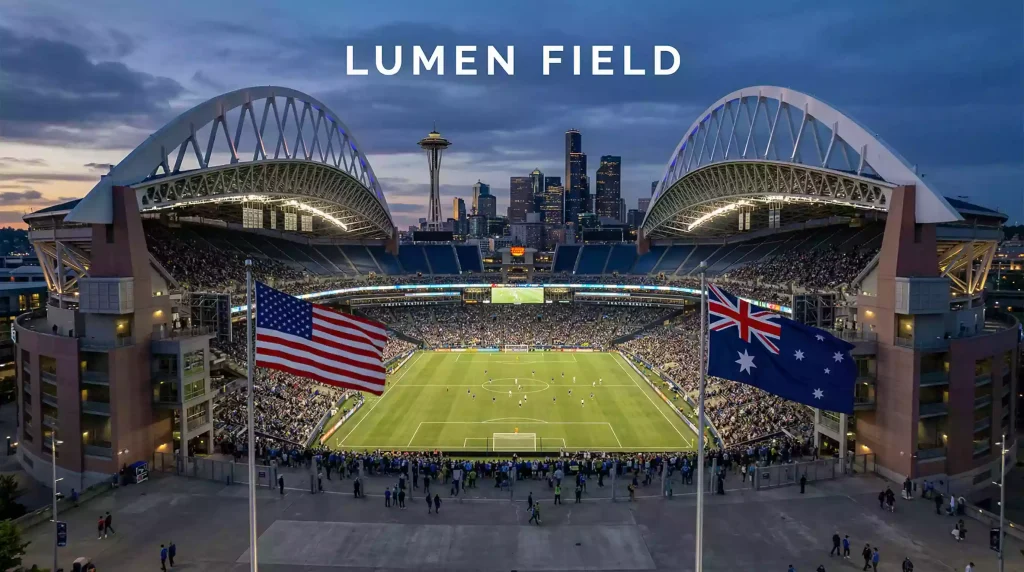
Table of Contents
Friday, June 19, 2026. Lumen Field, Seattle. The Socceroos face the United States of America on American soil, in front of approximately 69,000 spectators overwhelmingly supporting the hosts. This is the fixture that will likely determine whether Australia’s World Cup continues beyond the group stage. For every Australian punter who’s backed the green and gold, this venue becomes the setting for our biggest match of the tournament.
Seattle’s football culture rivals any American city. The Sounders have cultivated supporter traditions that genuinely approach European intensity, with organised sections, coordinated chants, and attendance figures that dwarf most MLS competitors. When the USA plays here, that existing infrastructure amplifies into something genuinely intimidating. The Socceroos walk into a cauldron — and we’ll need them to emerge unburnt if qualification hopes are to survive.
About Lumen Field
Opened in 2002, Lumen Field was built to replace the Kingdome as Seattle’s primary outdoor sports venue. The stadium serves as home to the Seattle Seahawks (NFL) and Seattle Sounders (MLS), creating dual-use operational expertise that World Cup organisers value. Unlike many American stadiums built purely for football, Lumen Field’s MLS residency means soccer-specific considerations have always influenced facility management.
The venue seats approximately 69,000 for football matches, with configuration adjustments maximising sightlines for the sport. The partial roof structure covers most seating areas while leaving the pitch exposed to Seattle’s famously variable weather. That roof design channels crowd noise downward onto the field, creating an acoustic effect that earned Lumen Field recognition as one of the loudest stadiums in American sports.
Seattle’s football-specific culture distinguishes Lumen Field from other World Cup venues. The Sounders regularly draw 40,000+ for MLS matches, with supporter groups in the south end creating atmosphere rarely seen in American soccer. This existing infrastructure means World Cup matches benefit from established traditions — the chants, the choreography, the understanding of how football crowds should sound and feel.
Facilities reflect contemporary American stadium standards. Wide concourses accommodate crowd flow efficiently, food and beverage options extend beyond typical stadium fare (Seattle’s culinary scene influences venue offerings), and technological infrastructure supports the connectivity demands of modern spectators. Lumen Field enters the World Cup operationally prepared through years of high-attendance events.
World Cup 2026 Matches
Lumen Field hosts six World Cup matches, including the crucial Group D fixture between USA and Australia on June 19. The venue also hosts other group stage games and a Round of 32 knockout match, ensuring Seattle remains central to tournament action through the opening knockout round. For a city with Lumen Field’s football culture, the assignment reflects FIFA’s recognition of genuine soccer community.
The USA versus Australia match represents the marquee fixture among Lumen Field’s assignments. Group D’s competitive balance means this match carries genuine stakes for both nations — the USA need to establish dominance, while Australia need to steal points if third-place qualification is to remain viable. The setting advantages the Americans enormously; overcoming that requires exceptional Socceroos performance.
For Australian viewers, the match kicks off at approximately 5:00 AM AEST on Friday morning. That’s middle-of-the-night viewing requiring dedication, but the stakes justify any sacrifice of sleep. This fixture likely determines whether Socceroos interest extends beyond group stages or whether we’re reduced to neutral observation for knockout rounds.
Other Lumen Field fixtures feature teams from various confederations, though none carry the direct Australian relevance of the USA match. The venue’s atmosphere should remain electric throughout its assignments, with Seattle’s soccer community ensuring passionate crowds regardless of which nations contest each fixture.
Socceroos Match: USA vs Australia
The stakes could hardly be higher. Australia’s World Cup 2026 campaign hinges significantly on this fixture. Having likely faced Türkiye in Vancouver for the opener, the Socceroos arrive in Seattle knowing that losing here essentially eliminates hope of finishing above third place. Even a draw would represent valuable achievement against the hosts; victory would transform Australian prospects entirely.
The USA’s home advantage extends beyond crowd support. They’ve played at Lumen Field repeatedly, understanding its dimensions, its surface characteristics, and its atmospheric effects. Christian Pulisic, Weston McKennie, and their teammates will feel comfort in familiar surroundings that visiting nations cannot replicate. The Socceroos face both the American squad and the American environment.
Tactically, Australia might adopt conservative approaches that frustrate rather than confront American attacking quality. Sitting deep, defending compactly, and seeking counter-attacks could neutralise USA’s technical superiority while creating opportunities on transition. It’s not aesthetically pleasing football, but World Cup group stages reward pragmatism over entertainment.
Betting markets will price USA as heavy favourites — approximately 1.50 for American victory, with Australian win around 6.00 and draws near 4.00. The value angle might involve Australia double chance (draw or win) at approximately 2.40, backing the Socceroos to avoid defeat rather than claiming outright victory. Total goals under 2.5 at around 1.90 also attracts, given Australia’s likely defensive approach.
For Australian punters, this match represents our tournament’s emotional peak regardless of previous results. Victories against Türkiye or Paraguay mean little if we cannot compete against the hosts. Whatever happens in Seattle shapes whether we approach the final group match with hope or resignation.
Seattle Soccer Culture
Seattle’s relationship with football predates the Sounders’ MLS arrival in 2009. The original Sounders played in the NASL alongside Pelé’s Cosmos, building traditions that survived through various league iterations until MLS provided permanent top-tier positioning. This history creates supporter culture with genuine depth — not manufactured for marketing purposes, but evolved across generations of actual fandom.
The Emerald City Supporters (ECS) occupy Lumen Field’s south end for Sounders matches, providing the organised chanting and visual displays that distinguish the venue from typical American sports environments. Their influence extends beyond match days into Seattle’s broader cultural identity — the city genuinely embraces football in ways that surprise visitors expecting American sporting monoculture.
For World Cup matches, this existing infrastructure amplifies naturally. Seattle’s soccer community will attend fixtures regardless of which nations play, providing baseline atmosphere that ensures no match feels empty or indifferent. When the USA plays, that community becomes overwhelming support that creates exactly the hostile environment the Socceroos must navigate.
The Pacific Northwest’s broader football development contributes too. Portland’s fierce rivalry with Seattle has elevated both cities’ soccer cultures, creating regional intensity that benefits World Cup atmosphere. Vancouver’s proximity adds Canadian interest to this northwestern football cluster. The Cascadia Cup — a supporter-organised trophy contested between Seattle, Portland, and Vancouver — demonstrates grassroots passion that predates and transcends professional league structures.
Getting There
Lumen Field sits in Seattle’s SoDo neighbourhood, south of downtown and directly adjacent to the city’s main transit hub. The stadium’s location prioritises accessibility, with light rail, buses, and Amtrak all stopping nearby. For World Cup visitors without local knowledge, Seattle’s public transit provides simpler navigation than many American cities offer.
Seattle-Tacoma International Airport (SEA) serves as the primary arrival point for international visitors. The airport connects directly to downtown Seattle via Link Light Rail, with journey times around 40 minutes. From downtown, reaching Lumen Field involves either continuing on light rail or walking from central locations — the stadium sits close enough to Pioneer Square and the waterfront that dedicated fans might choose on-foot approaches.
Accommodation options span Seattle’s diverse neighbourhoods. Downtown hotels offer maximum convenience for stadium access, though prices during World Cup matches will reflect demand. Capitol Hill, Fremont, and Ballard provide alternative bases with distinct character, accessible via public transit that makes venue connections manageable. Book early — Seattle’s hotel capacity will strain during peak tournament periods.
Match day logistics require typical American stadium planning. Arrive two hours before kickoff for group matches to navigate security screening efficiently. Clear bag policies apply, prohibited item lists exist, and stadium entry procedures follow familiar patterns for anyone who’s attended American sporting events previously. Lumen Field’s operational experience ensures efficient processing despite thorough security.
Seattle’s June weather typically offers comfortable conditions — temperatures around 18-22°C with the persistent possibility of light rain that defines Pacific Northwest climate. Dress in layers, bring rain-capable outerwear, and prepare for conditions that might shift throughout match duration. The partial roof provides shelter for most seats, but weather awareness remains sensible.
For Australian supporters making the journey, Seattle offers compelling tourism beyond football. Pike Place Market, the Space Needle, and the city’s renowned coffee culture provide memorable experiences between matches. The city’s progressive character and natural beauty — mountains visible from downtown on clear days — create welcoming atmosphere for international visitors. Seattle wants World Cup guests to enjoy their stay, and the city’s hospitality infrastructure reflects genuine enthusiasm for hosting global events.
The time zone difference between Seattle and Australian cities creates challenges for trip planning. Seattle operates on Pacific Daylight Time (PDT, UTC-7) during June, placing it 17 hours behind Sydney. Jet lag affects match enjoyment if not managed properly — consider arriving several days before the USA match to allow body clock adjustment before the most important 90 minutes of the Socceroos’ tournament.
For complete Socceroos squad analysis, betting odds, and all three Group D fixtures, see our Socceroos World Cup 2026 guide.
